The wrap dress is a seemingly simple silhouette on the surface, yet it’s enduringly fashion forward, figure flattering and forgiving! It’s been around for decades (or even centuries, depending upon whom you ask) and has become synonymous with Belgium-born New York-based designer Diane von Furstenberg, who popularized it with her take on the wrap introduced 40 years ago.
The fabled frock is front-and-center once again. It’s the subject of the exhibit “Journey of a Dress” that closes Thursday in Los Angeles and features vintage and contemporary designs by Ms. von Furstenberg, along with portraits of her by Andy Warhol, Barbara Kruger, Chuck Close, Francesco Clemente, Helmut Newton and Annie Leibovitz. It also includes stills of the wrap dress on the silver screen, adorning Cybill Shepherd in “Taxi Driver” and Amy Adams in “American Hustle.”
The DVF wrap dress also commemorated its birthday with a glitzy “wrapsody”-themed runway show at Mercedes-Benz Fashion Week in New York in February and a limited-edition collection of “Pop Wrap” dresses inspired by Warhol with bright colors and bold prints (available at www.dvf.com). The public was invited to take part in the celebration by sharing their stories and photos about job interviews, first dates and other memorable moments when they wore the dress of the hour.
“It is really all about the woman,” Ms. von Furstenberg said in an email interview with the Post-Gazette. “When it is on the hanger, it looks like nothing, but when a woman slips into it, something incredible happens. That is what has kept it relevant for all of these years.”
Ms. von Furstenberg was in her 20s when she debuted it. Prior to that she had made wrap tops reminiscent of the coverup wrap sweaters commonly worn by ballerinas and paired them with matching wrap skirts.
“I saw them together and thought, ‘Why not make it into a dress?’ So that is what I did,” she said. “It was really revolutionary at the time. Other designers were making these elaborate dresses. Everything was so complicated. I just set out to design an easy little dress that I could throw into a suitcase and wear anywhere, and it turned out to be exactly what women wanted at that time.”
She unveiled it at a period when “all the stars were in alignment,” in terms of women’s fashion wants, its fabrication, varying lengths and eye-catching prints, said Kathlin Argiro, an adjunct professor at the Fashion Institute of Technology in New York and a fashion designer with her own label since 1997. “It’s the ultimate dress, hands down.”
In the new book “The Lost Art of Dress: The Women Who Once Made America Stylish” ($28.99; Basic Books), author Linda Przybyszewski said part of the DVF wrap dress’ initial appeal was as an alternative to pantsuits. It was easy to wear and wash and sensual, thanks to the V-neck and the tie wrap.
It was a hit from the start, Ms. von Furstenberg said, adding that fashion editor and columnist Diana Vreeland “loved them.”
“I knew that was a good sign.”
A spot on the cover of Newsweek further legitimized the look.
“So many women wore that dress that I would count them walking up and down Park Avenue,” she said. “I was a European princess living the American dream.”
Trendy Fashion: Cheap Designer Bags
Replica PRADA Bags
Replica Michael Kors Bags
Michael Kors Wallets Cheap
But the wrap dress’s roots go back more than 40 years. Some could argue that they can be traced to ancient Egypt, said Michael Gainey, an adjunct professor for The Art Institute of Pittsburgh’s fashion programs. Pretty much anything in fashion can be linked back to earlier eras, Ms. Argiro said.
Many fashion historians credit early interpretations of the wrap dress (then called a popover dress) to American designer Claire McCardell in the 1930s and ’40s. This look was based upon wrap-style designs by Italian designer Elsa Schiaparelli. Another iteration that predates these is the 1920s taxi dress by Charles James, who’s the subject of an exhibit opening May 8 at the Metropolitan Museum of Art in New York.
Ms. von Furstenberg drew inspiration for print and color for her wrap dress from Emilio Pucci, she said, and its sense of “effortlessness and playing to a woman’s body was informed by Halston.”
Designers past and present adding their own twist to the wrap helps keep the dress relevant and caters to varying tastes and needs. For instance, Ms. Argiro added wrap dresses to her collection because she felt there was a need for ones that provided more coverage up top. The dresses have done well, she said, and have prompted her to launch an e-commerce site to sell them.
Ms. von Furstenberg continues to come up with new ways to wear the wrap, from romper renditions to long and flirty ones.
“With the wrap dress, anything can happen,” she said.
Monday, April 28, 2014

Monday, April 21, 2014
The Creative Class | Penny Martin, Editor
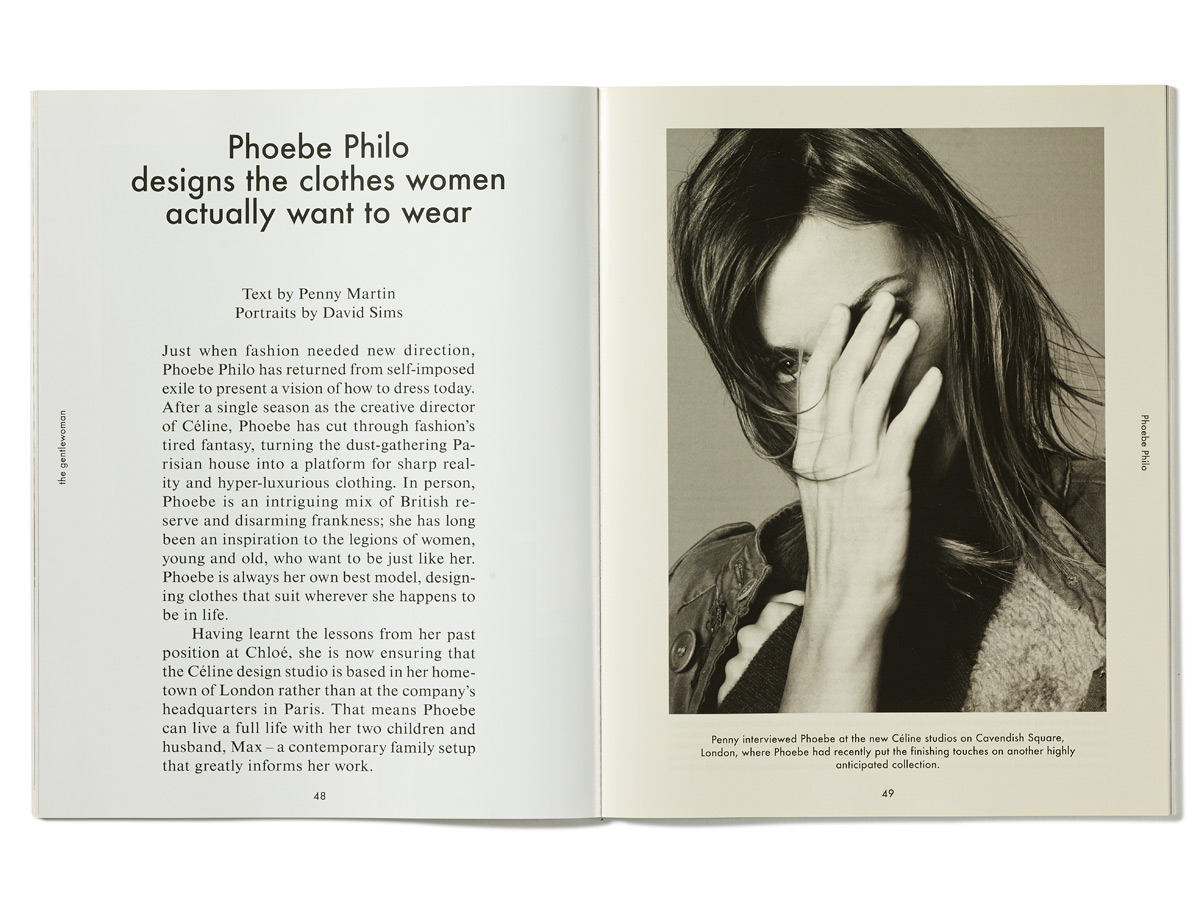
Launched in 2010 and known for its combination of glamour, pragmatism, modernity and warmth, The Gentlewoman now has nine issues under its belt. BoF sits down with editor-in-chief Penny Martin to discuss her role, the magazine’s DNA, and why the future is not about social media.

A trace of the academic is palpable in Penny Martin, editor-in-chief of The Gentlewoman. Her past as chair of fashion imagery at the University of the Arts, London, and years spent studying for a PhD (her unfinished thesis was on British Vogue and Thatcherism in the 1980s) is apparent in the way she responds to questions. “Could you qualify that?” she asks several times, carefully considering the implications of what has been posed.
Indeed, in a fashion media landscape rife with hype and hyperbole, there is no flippancy in the way Martin describes what she does at The Gentlewoman, which was launched in 2010 as a biannual sister publication to Gert Jonkers and Jop van Bennekom’s Fantastic Man and “celebrates modern women of style and purpose.”
“The future is about in-person transactions and real conversations rather than a cabaret of the nameless.”
“At that time, we felt there was a dearth of intelligent perspectives on fashion and there wasn’t really a fashion magazine for actual readers. I guess you could say that there are a few more magazines like us now. But when we started, many magazines had the visual right, or had the text right, but very few managed to reconcile the two. I think that’s very difficult — to produce long-form journalism and a personality-centred magazine that has equally eloquent imagery and graphic design.”
At Martin’s first meeting to discuss the creation of The Gentlewoman with Jonkers, Van Bennekom and art director Veronica Ditting, the team had just three sheets of visual references. “It just kind of took all four of us to look at them — a cover from Town and a spread from Bauhaus and a strange curio. We didn’t need to say anything more.”
With an early sense of visual direction, Martin and her team began formulating what the magazine would say: “We started by building up a common aesthetic. Quite Modernist. You might say it had parity with what was happening with Céline at the time. Coincidentally or not. We launched at the same time as [The Gentlewoman's first cover star Phoebe Philo’s] first collection [for Céline] arrived in stores.”
[Cheap Brand L V Casual Shoes Men
Fashion WMNS T-Shirts Cheap
Cheap Designer Sandals]
Source: The Gentlewoman
Source: The Gentlewoman
“To a large extent, we were also interested in that wardrobe-based approach to dressing that Fantastic Man had been excelling at for five or so years — that sartorial fascination with dressing rather than trend-led fashion. We explored that ‘good taste’ territory quite exhaustively as a sort of positioning statement for the first two or three years.”
But if there was one critique that was lobbed at The Gentlewoman’s early issues (the magazine has published nine issues so far) it was the tyranny of its own good taste, which might have grown suffocating, had the magazine not evolved its approach and “let a little bit of razzle in,” as Martin puts it. “In the last three issues, we’ve started to build up the fashion section and make it more coherent and less dispersed throughout the magazine. A bit more outspoken: maybe we’re a bit livelier, even a bit sexier.” Before The Gentlewoman, Martin had never edited a magazine before, though she was editor-in-chief of Nick Knight’s pioneering fashion website Showstudio from 2001 to 2008.
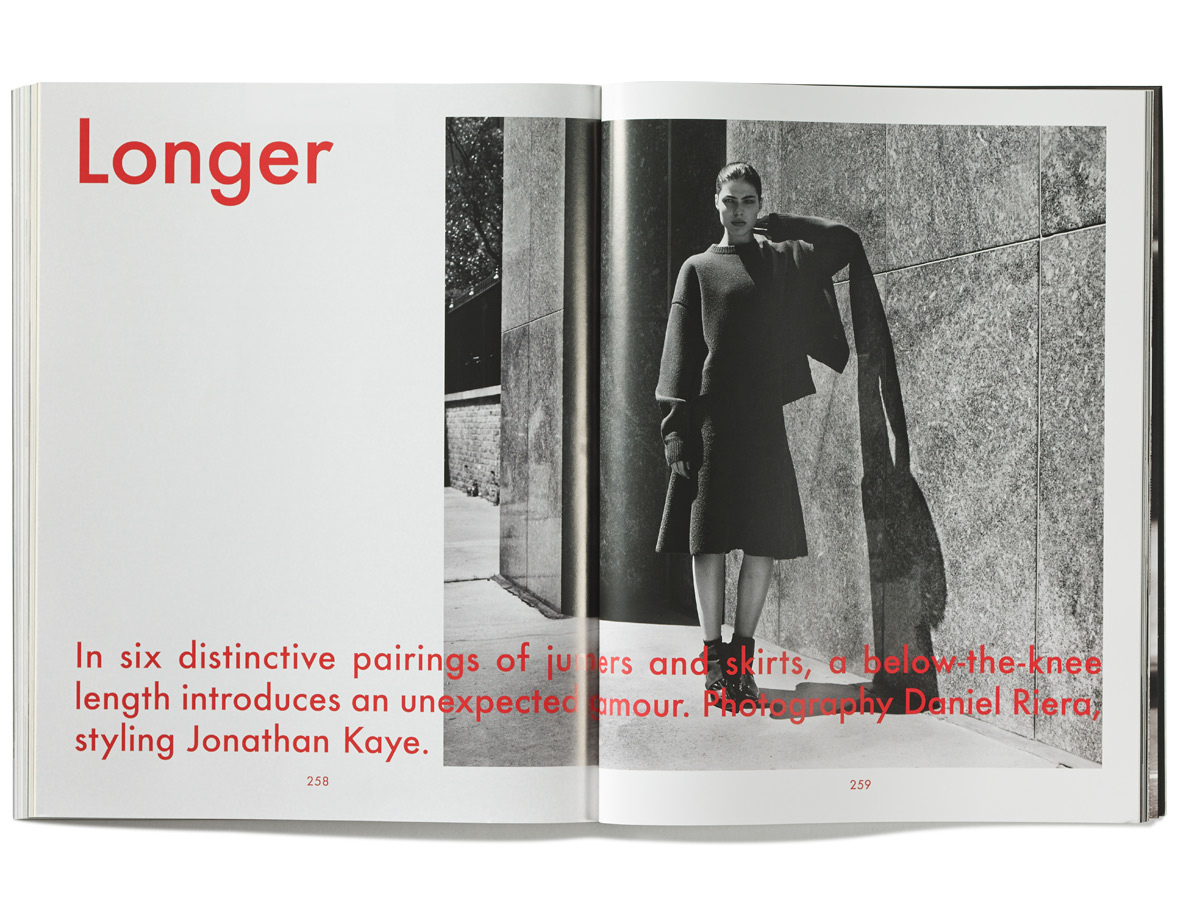
Key to developing the magazine’s visual sensibility was fashion director Jonathan Kaye, says Martin. “What Jonathan Kaye is very good at, I think, is creating solutions — things so seductive yet pragmatic that you can’t believe you hadn’t thought of them before. For the woman who feels overwhelmed with choice, he’s like a really good girlfriend who says, ‘Ok, calm down, so you do a sweatshirt and a second-hand trouser with a kitten-heel pump and that’s your solution.’ But, of course, it’s not just any sweater and trouser. He’s fastidious and it’s the one [look] that’s going to get you through without any embarrassing fuss. I think that’s the least patronising way to speak to grown, clever women about clothes. For last autumn, he did three-quarter-length skirts with a boot and a fuzzy jumper. It’s ‘Ok, here’s three things, that will work.’ There’s something extremely friendly, while still being directional [about his approach] that I love.”
Source: The Gentlewoman
This practical and modern approach is reflected in The Gentlewoman’s overall editorial point of view, which, according to Martin, begins with the woman and not the product. “I’m interested in what [The Gentlewoman] tells you about how modern women live, from the way they drink, dance, drive and speak to the way they sign their letters or conduct their divorces. We make sure that the magazine is not just a pornography of product that is supposedly interesting to women. It’s about putting those women at the centre of the material world around them. That balance is important to us.”
Cover stars have ranged from 88-year-old actor Angela Lansbury, shot in a peach silk blouse and Terry Richardson’s black frame glasses, to mega-popstar Beyoncé, looking calm, strong and composed in Dior with a face free of make-up. Meanwhile, on the inside, The Gentlewoman has profiled a wide range of women at the top of their game, including gardeners, entrepreneurs, novelists, artists and news anchors.
Like many editors of women’s magazines, Martin is often asked about her publication’s stance on feminism. “When people ask me about politics or feminism, I say that it isn’t a magazine about those things, it’s a magazineinformed by those things — among others.”
“Is it a feminist magazine? Well, it’s made by feminist people, so what do you think?! But I don’t want to make those values and principles fashionable, because I don’t want to undermine them by turning them into an aesthetic and I don’t want them to pass into the realm of the unfashionable. Let’s just assume that we all agree there should be equal pay and childcare and get on with it, eh?”
The magazine is based in a Victorian townhouse around the corner from the British Museum in London’s Bloomsbury district, a neighborhood know for its literary connections (Martin lives and also has a home office in the calm quarters of Ealing in West London). The team consists of a skeleton crew of around five, though this number swells to around ten during production and does not include the magazine’s extensive network of satellite contributors. But the leanness of the core staff has its benefits, says Martin. “We’re not massive, but that means we can work decisively and quite fast. We don’t need to focus-group [test] anything — you know from seeing the whites of one another’s eyes how excited or panic-stricken everyone else is about an idea.”
“There’s a lot of excitement through the days and then we open another bottle of wine at 9pm to get through the next shift,” she continues. “It’s an extremely ambitious, challenging environment. One might think that when you’re approaching the tenth issue that you might be giving into comfort a bit and tending to your consultancies, but that’s not what the environment is here. I work really long hours and I don’t have much of a boundary between personal space and work space, because this is what I would have done as a hobby if I’d had the chance, quite frankly.”
Small through the team may be, The Gentlewoman has generated highly respectable results for an independent title. “We were quite cocky in printing as many [copies] as Fantastic Man when we first launched, which was 72,000 in 2010 and they’d just had Ewan McGregor on the cover of their issue, which was a huge issue,” says Martin. “We thought ‘We’ll be lucky,’ but we actually sold out super-fast.”
The Gentlewoman printed 98,000 copies of the Beyoncé issue, which sold out and was re-ordered multiple times by the magazine’s distributor. “I know that our sell-through is amazing and that comparable magazines sell about a third of what they produce. We’re told there’s a strong case to come out more frequently. But we’re not convinced that’s necessarily the best allocation of our resources, when there are other things we could do or be.”
“Other things” includes the recently formed Gentlewoman Club which extends the magazine’s brand into physical events where readers can interact and chat with editors. “We’re starting to develop our website as a kind of portal for real things to happen rather than a bogus virtual community with likes and message boards. I am so not interested in that. I think that’s over.”
“For me, the future is going to be about in-person transactions and real conversations, skills and sharing in real spaces, rather than the cabaret of the nameless we’ve witnessed over the past decade.”
Saturday, April 19, 2014
Mulberry Cuts Prices While Burberry Raises Them

TWO of Britain's best-known labels have today unveiled different pricing strategies for the coming year, with Mulberry cutting prices and Burberry announcing that it may have to increase them.
Mulberry's pricing structure was reworked under recently departed CEO Bruno Guillon, to lift it above more affordable competitors - including Michael Kors - into the realm of catwalk labels like Prada and Balenciaga. The brand - which issued a second profit warning in three months today - will make the move knowing that the impact will be short-term, Reuters reports, but asserted that it is needed to assure the company's future financial strength.
Burberry, meanwhile, tempered an announcement of strong results in Asia with the warning that the strengthening pound may yet hurt sales. Burberry finance chief Carol Fairweather told The Times that there would be no "knee-jerk reactions" in terms of price changes, but that if rival retailers altered their prices, Burberry may follow - noting that unfavourable exchange rates could knock £30 million off its profits next year.
Sterling has risen around four per cent against the US dollar over the past six months.
Related Designer Fashion Review
Monday, April 7, 2014
Why Helena Never Became A Brand
HELENA CHRISTENSEN never put her name to merchandise and spin-off collections in the way that some of her fellow supermodels did - but the Danish model doesn't regret that decision for a minute.


"I never did it, and I probably lost out on a lot of deals because of that, but it just didn't feel right," Christensen admitted during an interview to promote her latest collaboration with Triumph which is proof, if anything, that anything she touched would have turned to gold. "I always thought, 'OK, you've got what you need, you've saved up what you could, so now you can work on things that inspire you.'"
Related: Cheap Michael Kors Replicas
And in the same way, in this age of social media fame, Christensen is still happy to fly a little under the radar.
"I'm not ambitious in that regard at all," she told us of garnering followers and fans. "Whether it's modelling, photography, designing, whatever I'm doing, I like little intimate projects. Most of what I'm doing just now as a photographer is for little underground magazines - not something that everyone is going to see. When someone approaches me, and says, 'we have this great project, it will have millions of viewers,' I think, 'oh god, no! That sounds horrible!'"

"I've really learned how different female body shapes are, and how many little details you need to consider when you're creating lingerie," she said. "How to enhance the parts of a woman's body that are beautiful, how to shape the parts that need to be shaped - and then how different we all are. I try not to create from just an aesthetic approach, but also consider comfort; the technical details are very important. It's the most feminine thing that you can put on your body, so it has to be right for a woman to feel good."A massive fan of lingerie - she has collected it for years - Christensen has learned that there's a lot more to lingerie than just looking sexy. Although that probably helps.
Follow us at Tumblr
Wednesday, March 19, 2014
The New All-Natural Beauty Secret from Africa You Need to Know About Now

Photo: Courtesy of Dr. Jackson’s

Photo: Courtesy of Dr. Jackson’s

Photo: Courtesy of Dr. Jackson’s
More Fashion Tips
Saturday, January 18, 2014
Ethical fashion brands target mass market
Consumer concerns about poor working conditions in Asian factories and toxic chemicals used in fabric production are driving interest in ethical fashion, helping it start to appeal to a broader market. The collapse of an eight-storey garment factory in Bangladesh last April that killed more than 1,100 people drew global attention to the perilous conditions.
Since then, labour unrest over working conditions has plagued the sector in Bangladesh and Cambodia.
The fashion industry has also been the target of vocal campaigns from environmental groups like Greenpeace. They have piled pressure on global brands to stop using chemicals which they say can pollute rivers near factories and threaten the health of workers and consumers.
Awareness of these issues has helped ethical fashion start to shake off its reputation as a niche sector, said Olaf Schmidt, organiser of the Ethical Fashion Show in Berlin.
The growing consumer interest is underlined by the number of brands showcasing their wares at the trade fair this year -- 116, up from 36 when the show launched two years ago and 85 last year, he said.
"It shows how important the topic is among consumers. But it is primarily about fashion. Being 'green' is in the background. The days of itchy jumpers are long gone," he said on Tuesday.
The Jan 14-16 show, part of Berlin fashion week, features brands which use organic cotton, wool and bamboo or alternative materials such as recycled leather and plastic, and pledge to improve pay and conditions for farmers and garment workers.
While the rapid rise of fashion discounter Primark might suggest otherwise, recent market research by Mintel shows consumers seek quality over price when shopping for clothes in Britain, France, Germany, Italy and Spain.
Mintel said ethical and environmental concerns are strongest in southern Europe.
"We don't want to go with a wagging finger to the customer. They should find us cool, and socially and environmentally friendly," Juerg Braendli said in Berlin as he launched men's casualwear brand "Outfitters of Change".
"We are not green fashion in the classic sense ... We want the collection and the price to appeal to the mass market."
The brand is marketing a range of men's T-shirts, sweatshirts and jackets costing 39 to 149 euros ($53-200) in Germany, Switzerland and Austria. It offers an online tool to allow customers to trace the full supply chain of each item.
Sebastian Gluschak, co-founder of Berlin-based Kancha, is pursuing a similar strategy for embroidered felt and leather laptop and smartphone sleeves made in Kyrgyzstan, each featuring a label signed by the craftsman who made it.
"We don't just want green customers. We want normal design-conscious consumers. That is the only way to make change," he said in front of a big photograph of Kyrgyz craftswoman Elniza.
Consumer concern on ethical issues has also been recognised by big brands like Hennes & Mauritz AB and Marks & Spencer who have been trying to improve their green credentials by offering to recycle unwanted clothes, while also making commitments to improve factory working conditions.
Mintel retail analyst John Mercer said mainstream retailers should also provide more information on the origin and ethics of their garments either through labelling or online.
"Retailers need to work together as an industry to make the clothing supply chain more transparent to prevent the government imposing legislation upon the sector," he said.
Emmanuelle Leveque says she was driven to set up fair trade clothing brand Origines Nomades by her experience as a buyer for the mainstream garment industry in Bangladesh and India.
"I was asking the supplier to work day and night and I realised you can't ask people to work 90 hours a week when in France we work a 35-hour week," Leveque said, modelling a hand-woven fitted jacket with embroidered edging made in Bangladesh that retails for 129 euros.
"People are still looking for a cheap price but if you give them a reason why, they are prepared to pay more," she said.
The fashion industry has also been the target of vocal campaigns from environmental groups like Greenpeace. They have piled pressure on global brands to stop using chemicals which they say can pollute rivers near factories and threaten the health of workers and consumers.
Awareness of these issues has helped ethical fashion start to shake off its reputation as a niche sector, said Olaf Schmidt, organiser of the Ethical Fashion Show in Berlin.
The growing consumer interest is underlined by the number of brands showcasing their wares at the trade fair this year -- 116, up from 36 when the show launched two years ago and 85 last year, he said.
"It shows how important the topic is among consumers. But it is primarily about fashion. Being 'green' is in the background. The days of itchy jumpers are long gone," he said on Tuesday.
The Jan 14-16 show, part of Berlin fashion week, features brands which use organic cotton, wool and bamboo or alternative materials such as recycled leather and plastic, and pledge to improve pay and conditions for farmers and garment workers.
While the rapid rise of fashion discounter Primark might suggest otherwise, recent market research by Mintel shows consumers seek quality over price when shopping for clothes in Britain, France, Germany, Italy and Spain.
Mintel said ethical and environmental concerns are strongest in southern Europe.
"We don't want to go with a wagging finger to the customer. They should find us cool, and socially and environmentally friendly," Juerg Braendli said in Berlin as he launched men's casualwear brand "Outfitters of Change".
"We are not green fashion in the classic sense ... We want the collection and the price to appeal to the mass market."
The brand is marketing a range of men's T-shirts, sweatshirts and jackets costing 39 to 149 euros ($53-200) in Germany, Switzerland and Austria. It offers an online tool to allow customers to trace the full supply chain of each item.
Sebastian Gluschak, co-founder of Berlin-based Kancha, is pursuing a similar strategy for embroidered felt and leather laptop and smartphone sleeves made in Kyrgyzstan, each featuring a label signed by the craftsman who made it.
"We don't just want green customers. We want normal design-conscious consumers. That is the only way to make change," he said in front of a big photograph of Kyrgyz craftswoman Elniza.
Consumer concern on ethical issues has also been recognised by big brands like Hennes & Mauritz AB and Marks & Spencer who have been trying to improve their green credentials by offering to recycle unwanted clothes, while also making commitments to improve factory working conditions.
Mintel retail analyst John Mercer said mainstream retailers should also provide more information on the origin and ethics of their garments either through labelling or online.
"Retailers need to work together as an industry to make the clothing supply chain more transparent to prevent the government imposing legislation upon the sector," he said.
Emmanuelle Leveque says she was driven to set up fair trade clothing brand Origines Nomades by her experience as a buyer for the mainstream garment industry in Bangladesh and India.
"I was asking the supplier to work day and night and I realised you can't ask people to work 90 hours a week when in France we work a 35-hour week," Leveque said, modelling a hand-woven fitted jacket with embroidered edging made in Bangladesh that retails for 129 euros.
"People are still looking for a cheap price but if you give them a reason why, they are prepared to pay more," she said.
Wednesday, January 15, 2014
Pure London show undergoes major revamp
For this year’s AW14 season, prepare to witness the refreshed Pure London show. Following major investment from parent company i2i Events, Pure London, has undergone a head-to-toe revamp.
It is now ready to impress with even more premium ready-to-wear womenswear, young fashion and footwear and accessory brands than ever, in five redefined sections; Agenda, Allure, Aspire, Spirit, Footwear & Accessories. 【Shoe Hub】
One must-see highlight Pure London’s newly formed Agenda section will play host to many premium brands making their show debut this season including Danish womenswear brands Gestuz and Stella Nova, premium womenswear brand Furansu, iconic Italian brand Ter de Caractère, London label Code Le Vush, leather brand Cuir Royal and German label Elfenhaut.
Premium French brand Nue 19.04, Italian label Stefanel as well as contemporary Danish brand Whiite, Korean brand CHOIBOKO, Malaysian fashion designer Melinda Looi, plus five brands represented by leading sales agency Macandi including D.Efect, Delicate Love, POMANDERE, About and Humanoid.
Subscribe to:
Posts (Atom)